
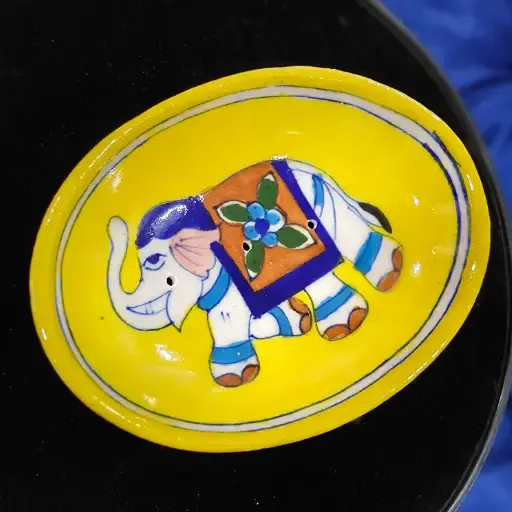
Object
Why it exists
Jaipur Blue Pottery is a traditional and highly distinctive form of glazed pottery originating from Jaipur, Rajasthan. It is widely recognized for its vibrant blue colors, intricate hand-painted designs, and its unique, clay-free composition. Here are the key characteristics that define it: A "Clay-Free" Ceramic: Unlike traditional pottery, Jaipur blue pottery does not use regular clay. Instead, the dough is crafted from a unique mixture of quartz stone powder, powdered glass, Multani Mitti (Fuller's earth), borax, gum, and water. The Signature Blue: The craft gets its name from the striking, deep blue color used extensively in its designs. This color is achieved using cobalt oxide. A secondary turquoise hue is often achieved using copper oxide, while modern variations sometimes include yellows, greens, and pinks. Persian and Mughal Influence: The art form has Turko-Persian origins, which is reflected in its aesthetic. The motifs are heavily inspired by nature, featuring intricate floral patterns, arabesques, and animal figures (such as birds and deer). Single Firing Process: The pottery is fired only once in a traditional kiln at relatively low temperatures (around 800°C to 850°C). This makes the final product more fragile and brittle than standard high-fired ceramics, which is why it is predominantly used for decorative purposes rather than heavy-duty serveware. Common Products: Because of its delicate nature and beautiful glazing, this technique is typically used to create decorative items such as wall plates, vases, coasters, tiles, door knobs, and small ornamental bowls.